Home for the holidays, or ‘home alone’ in The Netherlands?
The holidays are coming. Most of us celebrate Christmas and/or New Year’s Eve one way or another. Time to ask international students at the HAN: are you going back home to celebrate? Plus, what are traditions your family and country have?

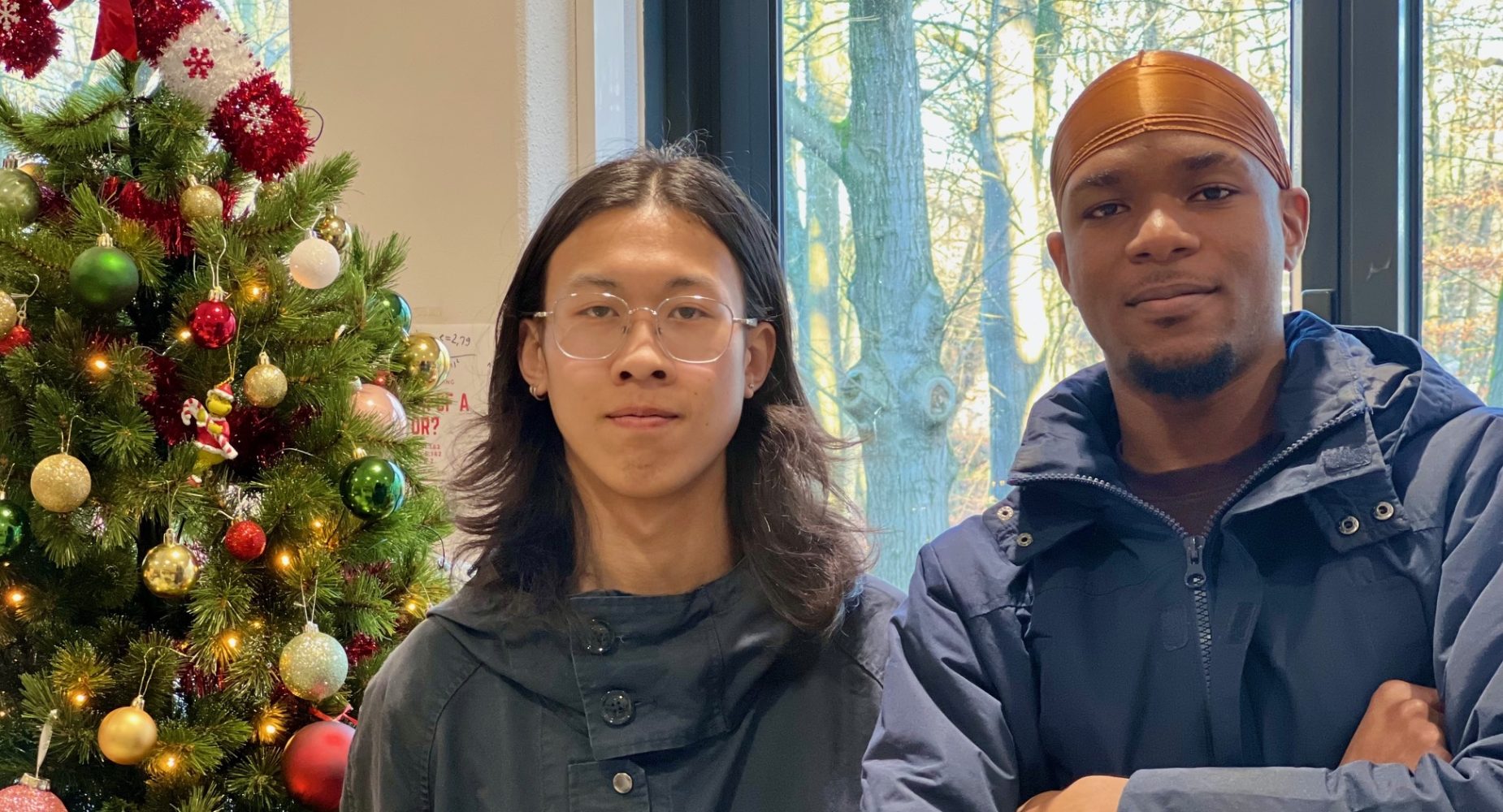
“We eat twelve grapes on New Year’s Eve”
Lucia (20), is from Valencia, Spain. She is in the Erasmus program and studies at the HAN for six months. Lucia will spend the holidays at home in Spain. “The older my grandparents get, the more precious it is to spend time with them .”
Family time
“For Christmas the whole family gathers at my grandfather’s home. We prepare all kinds of dishes, like tortilla, croquetas and rabo de toro (tail of the bull). At 6 p.m. we meet up and we have dinner at 9 p.m. We cook, especially my father, and we talk, have drinks and eat. It’s very cosy and lovely. I cherish the time with my family, especially the elder members. I am thankful we are all healthy, and I hope next year will bring us good fortune once more.”
Grapes for luck
“For New Year’s Eve, the Spanish have the tradition of eating twelve grapes: ‘las doce uvas de la suerte’ (the twelve grapes of luck). You eat a grape with each of the clock bell strikes at midnight on December 31, to welcome the new year. And yes, that is a little dangerous for kids and the elderly, because you have to eat them quickly. My mother used to cut them up for me, so I had twelve little pieces. The downside to not being here, is that I’ll miss out on the Dutch oliebollen, haha, but I’ll eat one before I leave!”
“We clean our house before Chinese New Year, to sweep away ill fortune”
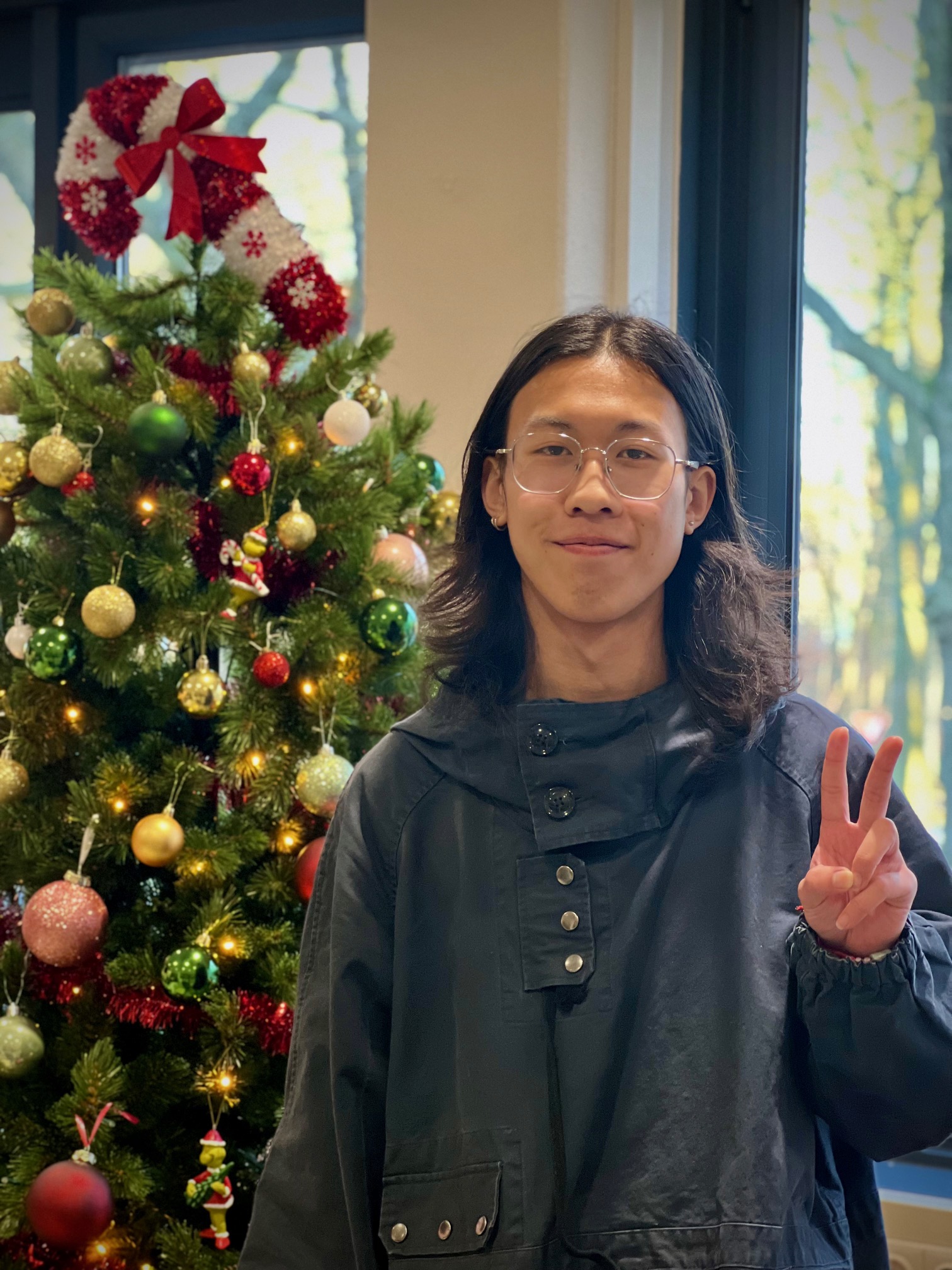
Yifei (21), is from China. He’s a first year International Business student. He is spending the holidays in The Netherlands, for the second time. “We don’t really celebrate Christmas in China: it’s not a public holiday. Therefore, I don’t miss it.”
No tree, no gifts
“In China, we don’t celebrate Christmas. Only a small population of the country is Christian and celebrates the birth of Christ in a more sober way, by coming together and having a meal. So: no tree, no gifts. However, younger generations enjoy the Western traditions and popular culture. They do put up a tree and exchange gifts. Stores also decorate more. Personally, I don’t really care about any of that. I will spend the holidays in my student house, just doing what I normally do. If I mind? No, not at all.”
Dragon and lion dances
“Chinese New Year is on February 17, 2026. The date changes every year, because it’s based on a lunisolar calendar. The festivities last fifteen days. We gather for ‘Nian Ye Fan’, the most important meal of the year. Usually we eat fish, dumplings and noodles.”
“I am from the southwest of China, where we don’t have a parade, but other parts of the country will have them, with dragon and lion dances. We have fireworks. And a lot of Chinese people will clean their house thoroughly, to sweep away ill fortune. I won’t be home for that either, but that’s okay. I respect traditions, but I am not someone who needs them.”
“We write our wishes on paper, burn it, then drink it”
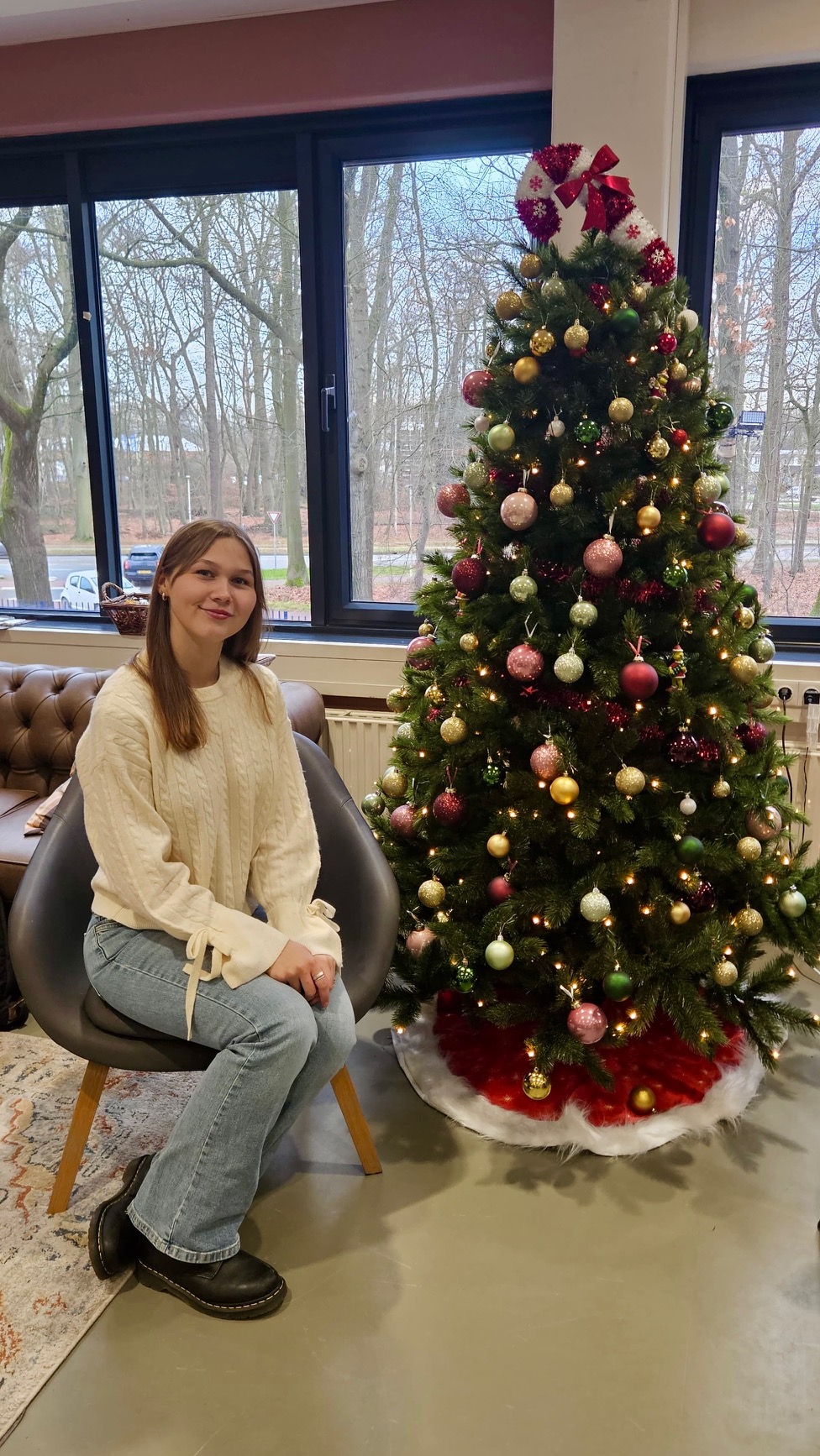
Simona (25) is from Estonia. She is in her first year of Communication Studies. She’ll spend Christmas with her Dutch boyfriend. “We’re doing ‘gourmetten’, a typical Dutch tradition.”
For all non-Dutchies: ‘gourmetten’ means everyone at the table has their own little pan and cooks their own food (meat, chicken, vegetables, fish) on an electric grill that is in the middle of the table.
Intense
“The first time I was introduced to gourmetten was a few weeks ago, during the birthday party for my boyfriend’s sister. I was fascinated. Everyone is grilling their own food, indoors, so afterwards your clothes, hair and skin smell like food and smoke. It’s… intense. Haha! But I like it. It’s very ‘gezellig’ and it tastes good. In Estonia, we usually eat ‘praekapsas’ (warm sauerkraut), pork, blood sausages and boiled potatoes. We also have tangerines. Every time I smell them, I think of Christmas. It’s okay that I am not home for the holidays. I fly home in January, so I will see my family soon.”
Drinking wishes
“A New Year’s tradition in Estonia is that we write down our wishes for the next year on a piece of paper and burn it. We put the ashes in our drink, which we consume during the countdown to midnight. That way our wishes become part of us, hopefully coming true.”

“We have a strong Caribbean culture, with British influences”
Gifford is from Jamaica. His Christmases are usually sunny and warm. For a few years in a row now, he will not be spending the holidays on his birth island. “It’s fine, I’ll hang out with other international students who won’t be going home.”
Interesting mix
“Jamaica is a member of the Commonwealth: there are a lot of British influences. Of course we also have a strong Caribbean culture, so it’s an interesting mix. For instance, we have the Christmas fire crackers and we eat fruitcake, but we also have ackee and saltfish, which is Jamaica’s national dish. It’s fruit with a savoury taste, served with salted codfish. We usually celebrate at my aunt’s house and the whole family is there.”
Big fireworks
For New Year’s Eve we have a big fireworks show in the harbour of our capitol, Kingston. Similar to the show here in The Netherland, in Rotterdam, at the Erasmus-bridge. But we sometimes light them up with neighbours. Where I will celebrate now? I don’t know yet. I’ll probably hang out with the other students who are staying in Arnhem.”



Alle reacties (0)